What to look for in workwear
A pair of work pants that lasts eight months instead of three is not twice as good. It is four times as good, and it usually costs about thirty percent more. That math is the whole argument for buying workwear carefully instead of cheaply.
We fit crews across Central Ohio, and the complaints are boring and consistent. Knees blow out. Seams split. A jacket that felt warm in the parking lot is useless by ten. None of that is bad luck. It comes down to fabric, construction, and fit, and you can check all three before you hand over a card.
Start with the fabric
Fabric weight is quoted in ounces per square yard. Higher numbers mean heavier cloth, which usually means tougher, and always means hotter and stiffer until it breaks in. There is no universally correct weight. There is a correct weight for what you do all day.
Cotton duck
Duck is the classic. It abrades slowly, takes a beating from tools and lumber, and softens into something you actually like wearing after a month or two. It also holds water, dries slowly, and gets heavy in the rain.
- 10 to 12 oz: framing, general construction, anything with sharp edges
- 7 to 9 oz: summer weight, still tough enough for most trades
- Under 7 oz: fine for shop work, not for crawling around a jobsite
Ripstop and poly-cotton blends
Blends trade some abrasion resistance for a lot less weight and much faster drying. Ripstop weaves add a grid of heavier threads so a small tear stops instead of running. If your work is more moving and less kneeling, this is usually the better buy.
Then check the construction
Fabric decides how the garment wears. Construction decides where it fails.
Seams
Turn the garment inside out on the sales floor. Nobody will stop you, and it tells you more than the hangtag.
Bar tacks
Short, dense stitches at pocket corners, belt loops, and fly ends. These are the spots that take sudden load. Count them. A pair of pants with bar tacks at every stress point is telling you the maker expects it to be used hard.
Triple stitching
Three rows of stitching on the main seams instead of one. It costs the manufacturer very little and roughly doubles how long the seam survives. Its absence on something sold as heavy duty is a bad sign.
Fit is a durability question
People treat fit as comfort. It is mostly wear. A garment that binds when you squat is being stretched past what the thread can take, every single time you squat, and it will fail at that spot inside a year.
- Squat all the way down. If the crotch pulls, size up or find a gusseted crotch.
- Reach straight overhead. The jacket hem should stay put, not ride up to your ribs.
- Kneel on both knees. Reinforced knee panels should land on your knee, not above it.
- Sit down. A waistband that gaps at the back will do that all day.
The most common sizing mistake we see is buying the waist that fits standing up. Buy the one that fits squatting.
Reading a spec tag
Most of what you need is printed on the tag, in a shorthand nobody explains.
Fabric line
Weight and composition
What we recommend by trade
These are starting points, not rules. Come in and we will argue about it.
Concrete, framing, and demo
12 oz duck, double front, bar tacked. Buy it stiff and let the job break it in.
Electrical, HVAC, and service work
8 oz blend or ripstop. You are on ladders and in attics more than you are on your knees.
Warehouse and delivery
Lighter blends with real stretch. Abrasion matters less than moving fast for ten hours.
What we actually stock
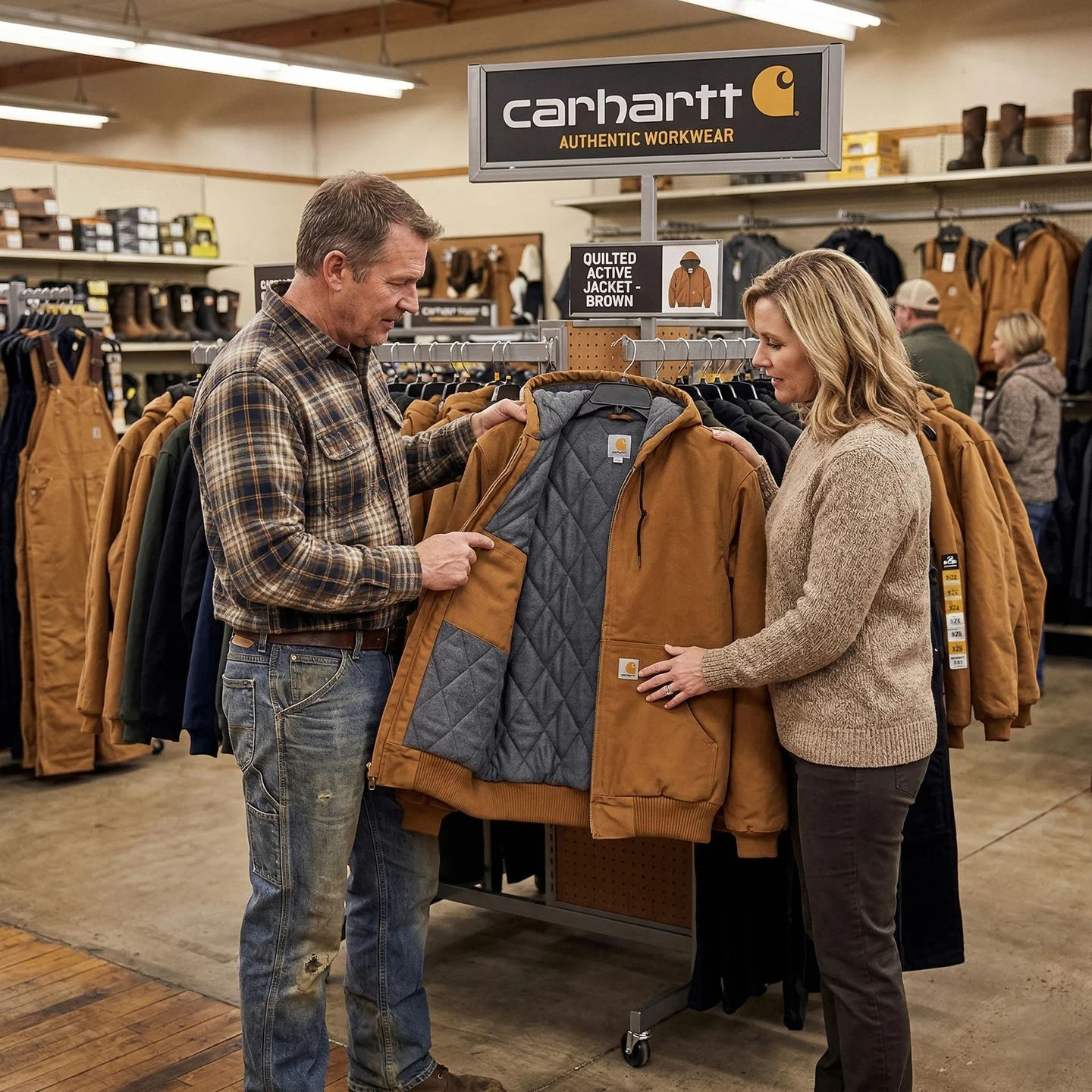
We carry Carhartt, Dickies, and a handful of others because they hold up, and because we can get replacements fast when they do not. If something fails early, bring it back and we will deal with the rep. That is the part a website cannot do for you.
Come see us in Thornville, or get in touch if you are outfitting a crew and want to talk sizing before you commit.